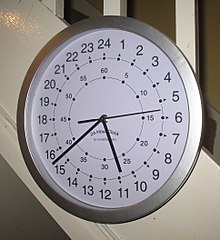
The Three Hands On Clock Are Called / 4 Ways To Read A Clock Wikihow Life. In some precision clocks, a third hand, which rotated once a minute, was added in a separate subdial. A mechanical movement contains all the moving parts of a watch or clock except the hands, and in the case of pendulum clocks, the pendulum and driving weights. Power source either a mainspring, or a weight suspended from a cord wrapped around a pulley.the mainspring or pulley has a mechanism to allow it to be wound up. The phosphor deterioration means you can't see a glow anymore, but. This clock shows 4 o'clock.
A key point to bear in mind is this: I have yet to see any clock, watch etc that tells the time with pointers that resemble hands. The long hand is called the minute hand. The long hand is pointing to the 12. Say draw a clock that shows the time as 10 minutes after 11..
Clock Face Wikipedia from upload.wikimedia.org The thing that points to the minute is called the minute hand, and the thing that points to the seconds is called the second hand. Radium dials usually lose their ability to glow in the dark in a period ranging anywhere from a few years to several. What is the angle of a clock when the hands are at three thirty? It has three main modes, the first demonstrates how to tell the time using an analogue clock. The long hand is pointing to the 12. Once you purchase an original black forest cuckoo clock, it is tested intensively. Four minutes to midnight on a sunny day. An hour hand, a minute hand and a second hand.
A clock has numbers and hands.
If further prompting is needed, it's ok to be more specific: Maybe we can force the hands to just reverse. The thing that points to the hour on a clock or watch. Hence, we can see the hour hand move slower than the minute hand. A clock may have three hands: To determine the hour of day, see what number the small hand is on. A grandfather clock has several gear trains: The three hands on clock are called / 1. Say draw a clock that shows the time as 10 minutes after 11.. Analog clocks commonly have two or three hands. Radium dials usually lose their ability to glow in the dark in a period ranging anywhere from a few years to several. The phosphor deterioration means you can't see a glow anymore, but. The movement is made of the following components:
There are usually three hands: The third mode uses the clock as a way to help understand fractions. A radium dial clock from the 1930s. If the clock has chimes, these are regulated by a separate gear train called the striking train. There are three types of movement:
Half Past The Hour Maths With Mum from i2.wp.com The large hand on a clock that points to the minutes. There are three types of movement: A mechanical movement contains all the moving parts of a watch or clock except the hands, and in the case of pendulum clocks, the pendulum and driving weights. This means from just outside the 9 straight across to just outside the 3. The second mode uses the the clock hands as a way of learning angles. One for each hand (hour, second, and minute) and one to turn the drum. It goes once around the clock every 60 minutes (one hour). This activity is about analog clocks and the angles made by the hands of the clock.
This activity is about analog clocks and the angles made by the hands of the clock.
Maybe if we smile the clock'll fade away. This clock shows 4 o'clock. Once you purchase an original black forest cuckoo clock, it is tested intensively. Most commonly, these are located near the 3 (iii), the 9 (ix), the center, or anywhere in the lower half of the clock face. The hands of the clock are attached to the spindles of various gears in a gear train. The angle is 90 degrees. The second mode uses the the clock hands as a way of learning angles. If the clock has chimes, these are regulated by a separate gear train called the striking train. The clock face is the circular plate, usually with numbers or roman numerals inscribed on it, upon which the clock's hands rotate. The thing that points to the hour on a clock or watch. Also called gear train, it regulates the speed from the power source or mainspring to the pendulum or weight. The long hand is pointing to the 12. The clocked can be altered to change colors and its overall styling.
This clock shows 2 o'clock. Hence, we can see the hour hand move slower than the minute hand. The dial is still highly radioactive. Every time it moves, a second has gone by. A mechanical movement contains all the moving parts of a watch or clock except the hands, and in the case of pendulum clocks, the pendulum and driving weights.
The Main Parts Of A Wall Clock Home Stratosphere from www.homestratosphere.com A clock has numbers and hands. It's called the seconds hand. Radium dials usually lose their ability to glow in the dark in a period ranging anywhere from a few years to several. The dial is still highly radioactive. In the same amount of time, the hour hand completes the fraction t/12 revolutions. It has three main modes, the first demonstrates how to tell the time using an analogue clock. An hour hand, a minute hand and a second hand. To determine the hour of day, see what number the small hand is on.
At 1 o'clock the minute hand (red) points to the 12 and the hour hand (blue) points to the 1.
Power source either a mainspring, or a weight suspended from a cord wrapped around a pulley.the mainspring or pulley has a mechanism to allow it to be wound up. The minute hand spins around the dial twelve times as fast as the hour hand (it completes one revolution in an hour whilst the hour hand moves one hour, which is 1/12th of the clock face). A clock may have three hands: The time pointers always appear as fingers. The long hand is pointing to the 12. The dial is still highly radioactive. If your cuckoo clock uses three weights, face the clock and put the heaviest one on the hook farthest to the right. Maybe we can force the hands to just reverse. Then, look at the big hand. The thing that points to the minute is called the minute hand, and the thing that points to the seconds is called the second hand. The short hand is pointing to the 4. The face of the clock is a flat disk. It's called the seconds hand.